Buy einbauküchen.eu ?
We are moving the project
einbauküchen.eu .
Are you interested in purchasing the domain
einbauküchen.eu ?
domain@kv-gmbh.de · 0541-91531010
Buy einbauküchen.eu ?
What is a possessive determiner?
A possessive determiner is a word that is used before a noun to show ownership or possession. Examples of possessive determiners include words like "my," "your," "his," "her," "its," "our," and "their." These determiners indicate who the noun belongs to or is associated with. **
What is a possessive determiner in French?
A possessive determiner in French is a word that indicates ownership or possession. It agrees in gender and number with the noun it is describing. Examples of possessive determiners in French include "mon" (my), "ton" (your), "son" (his/her/its), "notre" (our), and "leur" (their). These determiners are placed before the noun they modify. **


Similar search terms for Determiner
Top-Angebote
Products related to Determiner:
-
ClosetMaid Modular Storage 106.97-inch Wide Multi-Functional Organizer with DoorsDecorative trim, molding, and full back panels give each piece of ClosetMaid's Modular Storage collection a unique, boutique look, which when combined creates a vision of personalized organization you'll love to show off!796,49 $*Shipping: 0,00 $Secure redirect to the provider
-
Discount Dollar Deals Rotating Multi Functional Plastic Compact Home Hanger Rack Holder For Adjustable Belt Scarf Tie Rotating Multi Functional Plastic Compact Home Hanger Rack Holder For Adjustable Belt Scarf TieEfficient SpaceSaving Solution The Rotating MultiFunctional Plastic Compact Home Hanger is the ultimate spacesaving tool for your home. Whether you're organizing scarves, belts, ties, or accessories, this hanger is designed to keep everything neat...34,97 $*Shipping: 0,00 $Secure redirect to the provider
-
Inspire Curations Horizontal Modular Utility Storage Pack Compact Gear Organizer Pouch greenKeep small essentials organized, accessible, and ready whenever you need them. This modular utility pouch features a practical horizontal profile designed for storing everyday tools, accessories, and compact gear without unnecessary bulk. Its...85,00 $*Shipping: 0,00 $Secure redirect to the provider
-
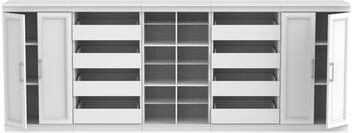
ClosetMaid Modular Storage 106.97-inch Wide Multi-Functional Organizer with DoorsDecorative trim, molding, and full back panels give each piece of ClosetMaid's Modular Storage collection a unique, boutique look, which when combined creates a vision of personalized organization you'll love to show off!835,06 $*Shipping: 0,00 $Secure redirect to the provider


-
What is a possessive determiner in English?
A possessive determiner in English is a word that is used before a noun to show ownership or possession. Examples of possessive determiners include "my," "your," "his," "her," "its," "our," and "their." These determiners indicate who the noun belongs to or is associated with. Possessive determiners are an essential part of grammar as they help clarify relationships between people or things. **
-
Does French have the demonstrative determiner "cettes"?
No, French does not have the demonstrative determiner "cettes." The correct forms of the demonstrative determiner in French are "cette" for singular feminine nouns, "ce" for singular masculine nouns, and "ces" for plural nouns regardless of gender. "Cettes" is not a standard form in the French language. **
-
Do you capitalize adjectives when they are preceded by a determiner?
In English, adjectives are not capitalized when they are preceded by a determiner. Determiners are words like "the," "a," "an," "this," "my," etc. Adjectives are only capitalized when they are at the beginning of a sentence or part of a proper noun. **
-
Do you write adjectives in capital or lowercase letters when there is a determiner before them?
Adjectives are typically written in lowercase letters when there is a determiner before them. Determiners such as articles (a, an, the), possessive pronouns (my, your, his), and demonstratives (this, that) are usually written in lowercase, while the adjective that follows them is also written in lowercase. This maintains consistency in sentence structure and follows standard grammar rules. **


In French, do you use an apostrophe with the interrogative pronoun "quelle" and the possessive determiner "ma"?
Yes, in French, you use an apostrophe with the interrogative pronoun "quelle" and the possessive determiner "ma" when they are followed by a word starting with a vowel or a silent "h". For example, "quelle est ton adresse?" (What is your address?) and "ma amie" (my friend). **
Why in French is 'l'orange' the fruit with the demonstrative determiner 'cette' feminine and not 'cet', because 'orange' starts with a vowel?
In French, the word 'orange' is considered feminine, regardless of whether it starts with a vowel or a consonant. The choice of the demonstrative determiner 'cette' instead of 'cet' is based on the gender of the noun 'orange', not the initial sound. In this case, 'orange' is feminine, so it is paired with the feminine determiner 'cette'. **
Top-Angebote
Products related to Determiner:
-
Housely Modern Velvet Modular L-Shaped Sectional - Compact Deep-Seat SofaCreate a cozy, style-forward seating area with this modern 3-piece corner sectional sofa. Designed in a space-smart L-shaped layout, this modular set delivers the ideal mix of comfort, function, and contemporary appeal.1672,49 $*Shipping: 0,00 $Secure redirect to the provider
-
Smart Shopping Spot Compact Car Safety Hammer Multi Functional Vehicle Escape Tool With Window Breaker Compact Car Safety Hammer Multi Functional Vehicle Escape Tool With Window BreakerEvery second counts in a car emergency. The car safety hammer is designed for drivers, passengers, and families who want to feel secure on the road. Lightweight yet powerful, this vehicle escape tool shatters windows, cuts seatbelts, and provides...34,97 $*Shipping: 0,00 $Secure redirect to the provider
-
ClosetMaid Modular Storage 106.97-inch Wide Multi-Functional Organizer with DoorsDecorative trim, molding, and full back panels give each piece of ClosetMaid's Modular Storage collection a unique, boutique look, which when combined creates a vision of personalized organization you'll love to show off!796,49 $*Shipping: 0,00 $Secure redirect to the provider
-
Discount Dollar Deals Rotating Multi Functional Plastic Compact Home Hanger Rack Holder For Adjustable Belt Scarf Tie Rotating Multi Functional Plastic Compact Home Hanger Rack Holder For Adjustable Belt Scarf TieEfficient SpaceSaving Solution The Rotating MultiFunctional Plastic Compact Home Hanger is the ultimate spacesaving tool for your home. Whether you're organizing scarves, belts, ties, or accessories, this hanger is designed to keep everything neat...34,97 $*Shipping: 0,00 $Secure redirect to the provider
-
What is a possessive determiner?
A possessive determiner is a word that is used before a noun to show ownership or possession. Examples of possessive determiners include words like "my," "your," "his," "her," "its," "our," and "their." These determiners indicate who the noun belongs to or is associated with. **
-
What is a possessive determiner in French?
A possessive determiner in French is a word that indicates ownership or possession. It agrees in gender and number with the noun it is describing. Examples of possessive determiners in French include "mon" (my), "ton" (your), "son" (his/her/its), "notre" (our), and "leur" (their). These determiners are placed before the noun they modify. **
-
What is a possessive determiner in English?
A possessive determiner in English is a word that is used before a noun to show ownership or possession. Examples of possessive determiners include "my," "your," "his," "her," "its," "our," and "their." These determiners indicate who the noun belongs to or is associated with. Possessive determiners are an essential part of grammar as they help clarify relationships between people or things. **
-
Does French have the demonstrative determiner "cettes"?
No, French does not have the demonstrative determiner "cettes." The correct forms of the demonstrative determiner in French are "cette" for singular feminine nouns, "ce" for singular masculine nouns, and "ces" for plural nouns regardless of gender. "Cettes" is not a standard form in the French language. **
Similar search terms for Determiner
-
Inspire Curations Horizontal Modular Utility Storage Pack Compact Gear Organizer Pouch greenKeep small essentials organized, accessible, and ready whenever you need them. This modular utility pouch features a practical horizontal profile designed for storing everyday tools, accessories, and compact gear without unnecessary bulk. Its...85,00 $*Shipping: 0,00 $Secure redirect to the provider
-
ClosetMaid Modular Storage 106.97-inch Wide Multi-Functional Organizer with DoorsDecorative trim, molding, and full back panels give each piece of ClosetMaid's Modular Storage collection a unique, boutique look, which when combined creates a vision of personalized organization you'll love to show off!835,06 $*Shipping: 0,00 $Secure redirect to the provider
-
Inspire Curations Horizontal Modular Utility Storage Pack Compact Gear Organizer Pouch khakiKeep small essentials organized, accessible, and ready whenever you need them. This modular utility pouch features a practical horizontal profile designed for storing everyday tools, accessories, and compact gear without unnecessary bulk. Its...78,00 $*Shipping: 0,00 $Secure redirect to the provider
-
Inspire Curations Horizontal Modular Utility Storage Pack Compact Gear Organizer Pouch cpKeep small essentials organized, accessible, and ready whenever you need them. This modular utility pouch features a practical horizontal profile designed for storing everyday tools, accessories, and compact gear without unnecessary bulk. Its...80,50 $*Shipping: 0,00 $Secure redirect to the provider
-
Do you capitalize adjectives when they are preceded by a determiner?
In English, adjectives are not capitalized when they are preceded by a determiner. Determiners are words like "the," "a," "an," "this," "my," etc. Adjectives are only capitalized when they are at the beginning of a sentence or part of a proper noun. **
-
Do you write adjectives in capital or lowercase letters when there is a determiner before them?
Adjectives are typically written in lowercase letters when there is a determiner before them. Determiners such as articles (a, an, the), possessive pronouns (my, your, his), and demonstratives (this, that) are usually written in lowercase, while the adjective that follows them is also written in lowercase. This maintains consistency in sentence structure and follows standard grammar rules. **
-
In French, do you use an apostrophe with the interrogative pronoun "quelle" and the possessive determiner "ma"?
Yes, in French, you use an apostrophe with the interrogative pronoun "quelle" and the possessive determiner "ma" when they are followed by a word starting with a vowel or a silent "h". For example, "quelle est ton adresse?" (What is your address?) and "ma amie" (my friend). **
-
Why in French is 'l'orange' the fruit with the demonstrative determiner 'cette' feminine and not 'cet', because 'orange' starts with a vowel?
In French, the word 'orange' is considered feminine, regardless of whether it starts with a vowel or a consonant. The choice of the demonstrative determiner 'cette' instead of 'cet' is based on the gender of the noun 'orange', not the initial sound. In this case, 'orange' is feminine, so it is paired with the feminine determiner 'cette'. **
* All prices are inclusive of VAT and, if applicable, plus shipping costs. The offer information is based on the details provided by the respective shop and is updated through automated processes. Real-time updates do not occur, so deviations can occur in individual cases. ** Note: Parts of this content were created by AI.