Buy einbauküchen.eu ?
We are moving the project
einbauküchen.eu .
Are you interested in purchasing the domain
einbauküchen.eu ?
domain@kv-gmbh.de · 0541-91531010
Buy einbauküchen.eu ?
When do you conjugate "avoir"?
The verb "avoir" is conjugated when talking about possession or to form compound tenses such as the passé composé. In these cases, "avoir" is conjugated according to the subject of the sentence. For example, "J'ai un chat" (I have a cat) or "Nous avons mangé" (We have eaten). **
How do you conjugate falloir?
The verb "falloir" is an impersonal verb, meaning it is only used in the third person singular. It is conjugated as "il faut" in the present tense, "il fallait" in the imperfect tense, and "il faudra" in the future tense. There is no need to conjugate it for different subjects, as it always remains in the third person singular form. **


Similar search terms for Conjugate
Top-Angebote
Products related to Conjugate:
-
ClosetMaid Modular Storage 106.97-inch Wide Multi-Functional Organizer with DoorsDecorative trim, molding, and full back panels give each piece of ClosetMaid's Modular Storage collection a unique, boutique look, which when combined creates a vision of personalized organization you'll love to show off!796,49 $*Shipping: 0,00 $Secure redirect to the provider
-
Discount Dollar Deals Rotating Multi Functional Plastic Compact Home Hanger Rack Holder For Adjustable Belt Scarf Tie Rotating Multi Functional Plastic Compact Home Hanger Rack Holder For Adjustable Belt Scarf TieEfficient SpaceSaving Solution The Rotating MultiFunctional Plastic Compact Home Hanger is the ultimate spacesaving tool for your home. Whether you're organizing scarves, belts, ties, or accessories, this hanger is designed to keep everything neat...34,97 $*Shipping: 0,00 $Secure redirect to the provider
-
Inspire Curations Horizontal Modular Utility Storage Pack Compact Gear Organizer Pouch blackKeep small essentials organized, accessible, and ready whenever you need them. This modular utility pouch features a practical horizontal profile designed for storing everyday tools, accessories, and compact gear without unnecessary bulk. Its...80,50 $*Shipping: 0,00 $Secure redirect to the provider
-
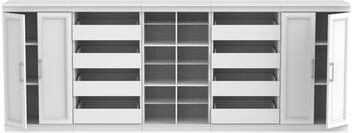
ClosetMaid Modular Storage 106.97-inch Wide Multi-Functional Organizer with DoorsDecorative trim, molding, and full back panels give each piece of ClosetMaid's Modular Storage collection a unique, boutique look, which when combined creates a vision of personalized organization you'll love to show off!835,06 $*Shipping: 0,00 $Secure redirect to the provider


-
How do you conjugate French adjectives?
In French, adjectives must agree in gender (masculine or feminine) and number (singular or plural) with the noun they modify. To conjugate a French adjective, you need to add the appropriate ending to match the gender and number of the noun it describes. For example, to make the adjective "petit" (small) agree with a masculine singular noun, you would use "petit." But if the noun is feminine singular, you would use "petite." And for a masculine plural noun, you would use "petits," and for a feminine plural noun, you would use "petites." **
-
How do you conjugate in Hebrew?
In Hebrew, verbs are conjugated based on the subject of the sentence and the tense of the action. There are different conjugation patterns for each tense (past, present, future) and for each subject (I, you, he/she/it, we, you all, they). The verb root remains the same, but the conjugation changes to match the subject and tense. Additionally, Hebrew verbs also change based on gender and number of the subject. Learning the conjugation patterns and practicing with different verbs is essential for mastering Hebrew verb conjugation. **
-
Can you help me conjugate avoir?
Sure! The verb "avoir" is conjugated as follows: - J'ai (I have) - Tu as (You have) - Il/Elle/On a (He/She/One has) - Nous avons (We have) - Vous avez (You have) - Ils/Elles ont (They have) **
-
How do you conjugate in French?
In French, verbs are conjugated to match the subject of the sentence, including the person (I, you, he/she, we, they) and the tense (present, past, future, etc.). To conjugate a regular verb in the present tense, you remove the infinitive ending (-er, -ir, -re) and add the appropriate ending for the subject (je, tu, il/elle, nous, vous, ils/elles). For example, for the verb "parler" (to speak), you would conjugate it as "je parle" (I speak), "tu parles" (you speak), "il/elle parle" (he/she speaks), "nous parlons" (we speak), "vous parlez" (you speak), "ils/elles parlent" (they speak). Irregular verbs have their own unique conjugation patterns that need to be memorized. **


How do you conjugate "perire" in Latin?
The verb "perire" in Latin is conjugated as follows in the present tense: - I perish: pereo - You perish: peris - He/she/it perishes: perit - We perish: perimus - You (plural) perish: peritis - They perish: pereunt **
How do you conjugate the Passé Composé?
To conjugate the Passé Composé in French, you typically use the auxiliary verb "avoir" or "être" followed by the past participle of the main verb. The choice between "avoir" and "être" depends on the verb being used and whether it is a transitive or intransitive verb. The past participle of regular -er verbs is formed by replacing the -er ending with -é, for -ir verbs you replace the -ir ending with -i, and for -re verbs you replace the -re ending with -u. Irregular verbs have unique past participle forms that need to be memorized. **
Top-Angebote
Products related to Conjugate:
-
Housely Modern Velvet Modular L-Shaped Sectional - Compact Deep-Seat SofaCreate a cozy, style-forward seating area with this modern 3-piece corner sectional sofa. Designed in a space-smart L-shaped layout, this modular set delivers the ideal mix of comfort, function, and contemporary appeal.1672,49 $*Shipping: 0,00 $Secure redirect to the provider
-
Smart Shopping Spot Compact Car Safety Hammer Multi Functional Vehicle Escape Tool With Window Breaker Compact Car Safety Hammer Multi Functional Vehicle Escape Tool With Window BreakerEvery second counts in a car emergency. The car safety hammer is designed for drivers, passengers, and families who want to feel secure on the road. Lightweight yet powerful, this vehicle escape tool shatters windows, cuts seatbelts, and provides...34,97 $*Shipping: 0,00 $Secure redirect to the provider
-
ClosetMaid Modular Storage 106.97-inch Wide Multi-Functional Organizer with DoorsDecorative trim, molding, and full back panels give each piece of ClosetMaid's Modular Storage collection a unique, boutique look, which when combined creates a vision of personalized organization you'll love to show off!796,49 $*Shipping: 0,00 $Secure redirect to the provider
-
Discount Dollar Deals Rotating Multi Functional Plastic Compact Home Hanger Rack Holder For Adjustable Belt Scarf Tie Rotating Multi Functional Plastic Compact Home Hanger Rack Holder For Adjustable Belt Scarf TieEfficient SpaceSaving Solution The Rotating MultiFunctional Plastic Compact Home Hanger is the ultimate spacesaving tool for your home. Whether you're organizing scarves, belts, ties, or accessories, this hanger is designed to keep everything neat...34,97 $*Shipping: 0,00 $Secure redirect to the provider
-
When do you conjugate "avoir"?
The verb "avoir" is conjugated when talking about possession or to form compound tenses such as the passé composé. In these cases, "avoir" is conjugated according to the subject of the sentence. For example, "J'ai un chat" (I have a cat) or "Nous avons mangé" (We have eaten). **
-
How do you conjugate falloir?
The verb "falloir" is an impersonal verb, meaning it is only used in the third person singular. It is conjugated as "il faut" in the present tense, "il fallait" in the imperfect tense, and "il faudra" in the future tense. There is no need to conjugate it for different subjects, as it always remains in the third person singular form. **
-
How do you conjugate French adjectives?
In French, adjectives must agree in gender (masculine or feminine) and number (singular or plural) with the noun they modify. To conjugate a French adjective, you need to add the appropriate ending to match the gender and number of the noun it describes. For example, to make the adjective "petit" (small) agree with a masculine singular noun, you would use "petit." But if the noun is feminine singular, you would use "petite." And for a masculine plural noun, you would use "petits," and for a feminine plural noun, you would use "petites." **
-
How do you conjugate in Hebrew?
In Hebrew, verbs are conjugated based on the subject of the sentence and the tense of the action. There are different conjugation patterns for each tense (past, present, future) and for each subject (I, you, he/she/it, we, you all, they). The verb root remains the same, but the conjugation changes to match the subject and tense. Additionally, Hebrew verbs also change based on gender and number of the subject. Learning the conjugation patterns and practicing with different verbs is essential for mastering Hebrew verb conjugation. **
Similar search terms for Conjugate
-
Inspire Curations Horizontal Modular Utility Storage Pack Compact Gear Organizer Pouch blackKeep small essentials organized, accessible, and ready whenever you need them. This modular utility pouch features a practical horizontal profile designed for storing everyday tools, accessories, and compact gear without unnecessary bulk. Its...80,50 $*Shipping: 0,00 $Secure redirect to the provider
-
ClosetMaid Modular Storage 106.97-inch Wide Multi-Functional Organizer with DoorsDecorative trim, molding, and full back panels give each piece of ClosetMaid's Modular Storage collection a unique, boutique look, which when combined creates a vision of personalized organization you'll love to show off!835,06 $*Shipping: 0,00 $Secure redirect to the provider
-
Inspire Curations Horizontal Modular Utility Storage Pack Compact Gear Organizer Pouch greenKeep small essentials organized, accessible, and ready whenever you need them. This modular utility pouch features a practical horizontal profile designed for storing everyday tools, accessories, and compact gear without unnecessary bulk. Its...85,00 $*Shipping: 0,00 $Secure redirect to the provider
-
Inspire Curations Horizontal Modular Utility Storage Pack Compact Gear Organizer Pouch cpKeep small essentials organized, accessible, and ready whenever you need them. This modular utility pouch features a practical horizontal profile designed for storing everyday tools, accessories, and compact gear without unnecessary bulk. Its...80,50 $*Shipping: 0,00 $Secure redirect to the provider
-
Can you help me conjugate avoir?
Sure! The verb "avoir" is conjugated as follows: - J'ai (I have) - Tu as (You have) - Il/Elle/On a (He/She/One has) - Nous avons (We have) - Vous avez (You have) - Ils/Elles ont (They have) **
-
How do you conjugate in French?
In French, verbs are conjugated to match the subject of the sentence, including the person (I, you, he/she, we, they) and the tense (present, past, future, etc.). To conjugate a regular verb in the present tense, you remove the infinitive ending (-er, -ir, -re) and add the appropriate ending for the subject (je, tu, il/elle, nous, vous, ils/elles). For example, for the verb "parler" (to speak), you would conjugate it as "je parle" (I speak), "tu parles" (you speak), "il/elle parle" (he/she speaks), "nous parlons" (we speak), "vous parlez" (you speak), "ils/elles parlent" (they speak). Irregular verbs have their own unique conjugation patterns that need to be memorized. **
-
How do you conjugate "perire" in Latin?
The verb "perire" in Latin is conjugated as follows in the present tense: - I perish: pereo - You perish: peris - He/she/it perishes: perit - We perish: perimus - You (plural) perish: peritis - They perish: pereunt **
-
How do you conjugate the Passé Composé?
To conjugate the Passé Composé in French, you typically use the auxiliary verb "avoir" or "être" followed by the past participle of the main verb. The choice between "avoir" and "être" depends on the verb being used and whether it is a transitive or intransitive verb. The past participle of regular -er verbs is formed by replacing the -er ending with -é, for -ir verbs you replace the -ir ending with -i, and for -re verbs you replace the -re ending with -u. Irregular verbs have unique past participle forms that need to be memorized. **
* All prices are inclusive of VAT and, if applicable, plus shipping costs. The offer information is based on the details provided by the respective shop and is updated through automated processes. Real-time updates do not occur, so deviations can occur in individual cases. ** Note: Parts of this content were created by AI.